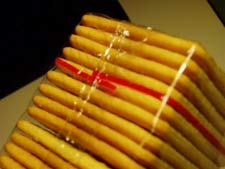
 Alexander Freitas of the Infinity Squared blog notes the difficulties with frustrating tear-strips on packaging, and, comparing an easier-to-open pack from one manufacturer with a difficult tearstrip from another, suggests (somewhat along the lines of ‘Forcing functions designed to increase product consumption‘), that the company’s thought process may be something like:
We will make packaging that a consumer will lose patience trying to open, and so will get a knife, destroy the packaging, and have to eat all those big cookies in one go. We will be rich.
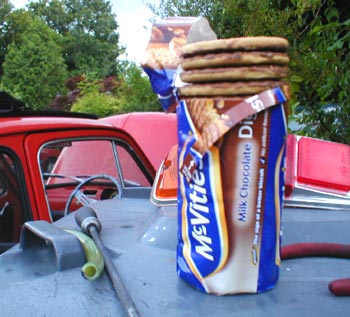
As he also notes, patent issues may be responsible for some of the different variants of tearstrips used (some more effective than others), but I really would be very interested to know whether the ‘McVitie’s technique‘ (below) – whereby the tear-strip is positioned a long way down the packet – is genuinely intended to encourage greater consumption, or just to make it easier to grip the packet while pulling the strip.
Pingback: McVitie says ‘Yes’ to sexy babes : Spada Professional Services PR Firm