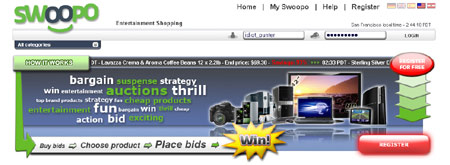
Swoopo, a new kind of “entertainment shopping” auction site, takes Martin Shubik’s classic Dollar Auction game to a whole new, automated, mass participation level. It’s an example of the escalation of commitment, or a sunk cost fallacy, where we increase our commitment (in this case with real money) even though (in this case) most users’ positions are becoming less and less valuable.
Thee Cake Scraps has a good analysis of how this works:
It is a ‘auction’ site…sort of. Swoopo sells bids for $1. Each time you use a bid on an item the price is increased by $0.15 for that item. So here is an example:
Person A buys 5 bids from Swoopo for $5 total. Person A sees an auction for $1000 and places the first bid. The auction is now at $0.15. Person A now has a sunk cost of $1 (the cost of the bid they used). There is no way to get that dollar back, win or lose. If Person A wins they must pay the $0.15.
Person B also purchased $5 of bids. Person B sees the same auction and places the second bid. The auction price is now $0.30 (because each bid increases the cost by exactly 15 cents). Person B now has a sunk cost of $1. If Person B wins they must pay the $0.30. Swoopo now has $2 in the bank and the auction is at 30 cents.
This can happen with as many users as there are suckers to start accounts. Why are they suckers? Because everybody that does not have the top spot just loses the money they spent on bids. *Poof* Gone. If you think this sounds a little like gambling or a complete scam you are not alone. People get swept up into the auction and don’t want to get nothing for the money they spent on bids.
The key thing seems to be that some bidders will win items at lower than RRP, i.e. they get a good deal, but for every one of those, there are many, many others who have all paid for their bids (money going to Swoopo) and received nothing as a result. The house will always win.
Swoopo staff respond here and here (at Crunchgear).
As is obligatory with this blog, I need to ask: where else have systems been designed to use this behaviour-shaping technique? There must be many examples in auctions, games and gambling in general – but can the idea be applied to consumer products/services, using escalating commitment to shape user behaviour? Can this be applied to help users save energy, do more exercise, etc as opposed merely to extracting value from them with no benefit in return?
27 Comments