Archive
Brunel

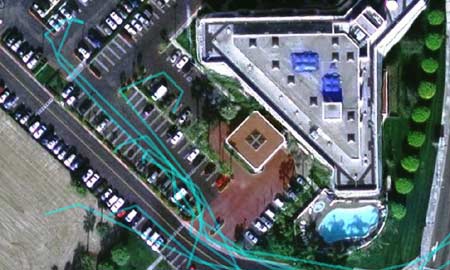
Sketch of Runnymede proposal, John Thompson & Partners
All sketches from John Thompson & Partners’ ‘Runnymede Campus Community Planning Broadsheet’ and photographs of the public presentation. Apologies for the variations in image quality and colour balance.

This post’s overdue but I wanted to have some real news (and images) rather than pure speculation.

Read More

Tower A, Brunel University
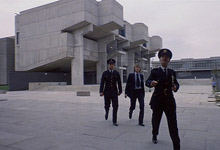
School of Engineering & Design, Tower A, Brunel University, Uxbridge, Middlesex.

After a month of lifting and shifting boxes, frantic cleaning, driving lots of different vehicles, and dealing with bureaucracy, I’ve now moved house and started my PhD at Brunel; with broadband now set up, and enough space to sit with a laptop amid the not-yet-unpacked boxes, I’ll hopefully be able to get back to regular blogging. Many thanks to everyone who’s sent examples and comments in the interim.

I now both live and work in semi-Brutalist structures; it’ll be interesting to see what effect that architectural influence has.

The generally poor performance of this site over the past couple of months (database queries timing out leading to blank pages or internal WordPress error messages) has been frustrating and I will be moving hosts at some point in due course. There may be some redesign or at least restructuring of certain parts of the site too, as already the PhD has made me think somewhat more analytically about how to classify and explain methods of control and ‘design for behaviour change’.

Read More

Snowdown, by Matthew Barnett
Main image and above right: Snowdown aesthetic model; below right: Snowdown functional test rig prototype.

Snowdown, by Matthew Barnett, is fantastic. Powered by a child exercising, moving the handle, it crushes ice cubes and compacts them to make snowballs. There are a lot of kids out there who would very much like one of these, at any time of year – summer especially. Shown last month at Made in Brunel – I hope Matthew finds a way to take the project forward.

Is the requiring-exercise-to-get-a-reward strategy an architecture of control? I think so, and I think this product exemplifies why and how it is possible to use ‘control’ for the benefit of the user. Sure, society benefits when children grow up more healthily, but the children (and their parents) also benefit. And Snowdown actively rewards the user for his or her effort.

We’ve seen this thinking, specifically regarding encouraging exercise, embodied before on the blog in two products, as far as I can remember: Gillian Swan’s Square-Eyes (also from Brunel), and, of course, the Entertrainer. Both of these use television as the ‘reward’ for exercise – in the case of Square-Eyes, 100 steps on the special insole equate to 1 minute of TV time (controlled by a base station); with the Entertrainer, the user’s heart rate is monitored (you can set the level of exercise you want) and the TV’s volume is controlled, which is an interesting concept: you exercise watching the TV, keeping your heart rate within the optimal range:

The chest strap heart monitor wirelessly relays your heart rate to the Entertrainer™. The Entertrainer then determines if your heart rate is within, above, or below your target zone. If your heart rate is low, the Entertrainer lowers the volume on your television (or other infrared remotely controlled device). If your heart rate is within the target zone (range), the volume remains at a comfortable level. If your heart rate is too high, the volume increases.

Stanford’s Captology research group has also investigated exercise-promotion persuasive technology extensively (e.g. here) but I’m not sure to what extent actual ‘control’ is involved, as opposed to persuasion through making exercise more attractive/fun.

Square-Eyes by Gillian Swan Square-Eyes by Gillian Swan
Square-Eyes by Gillian Swan, using special insoles and a control unit

Image from theentertrainer.com
The Entertrainer (image from theentertrainer.com)

Nevertheless, with all the above examples, the element of control is very much something the user opts into (unless, say, parents were to force their kids to use Square-Eyes or have no TV) rather than having it imposed with no choice. The ‘code’ is embedded in the product architecture, but you make a choice to use the product because you want the discipline it can help give you.

And again, Snowdown stands out, since it is something fun in itself. Indeed, it may be stretching it to see it as any more a control example than any other children’s toy which requires exercise (bicycle, trampoline, rollerskates, etc). If I hadn’t seen Matthew’s description which specifically highlighted the product’s ability to promote exercise in children, I probably wouldn’t have considered it in this light at all. And it’s perhaps this ‘mindless margin’ (to quote Brian Wansink) of helping yourself while not feeling that you’re being ‘controlled’, which might lie behind positive, successful, ethical, useful applications of architectures of control in design as opposed to the generally anti-user spirit with which the majority are imbued.

Read More

Three student projects on show at Made in Brunel earlier this month took the idea of moving the function of a water meter to the tap (faucet) itself, to act as a ‘speedometer‘ and thus encourage users to reduce their water usage (or wastage). The three projects, while similar, have slightly different emphases:

Tap Meter, by Henry Ellis-Paul

Henry Ellis-Paul’s Tap Meter, above, which was also exhbited at the Ideal Home Show, shows the user the amount of water used in that particular instance. As he says, “this information changes the user’s habits and behaviour through involvement and emotional attachment to the product” – it could also presumably be used to measure out the amount of water used for recipes or to ensure that we each drink the right amount each day.

Water & Energy Saving Tap, by Stefan Grosvenor

Stefan Grosvenor’s Water and energy saving tap (above) additionally addresses electricity usage due to hot water, combining both water and electricity usage in an ‘equation’ to make users more aware of the total impact they have each time they turn the tap. The project was intended as a future concept for the Red Cross, to be used as part of a campaign which would “both help others less fortunate, as well as educating users with their potential.”

Squirt, by Meghana Vaidyanathan

Meghana Vaidyanathan’s Squirt (above) is specifically intended for children, hence the bright colours and anthropomorphism of the design:

At our current consumption rate, it is predicted that we could use up to 40% more water in the next 20 years. Squirt is an awareness-based water meter designed for children aged 3 to 6 and aims to instil conservational etiquette in the mind of a child. Squirt has a child-friendly interface and displays the amount of water consumed over a period of time from the tap to which it is attached.

The term “conservational etiquette” is interesting – how easy is it to instil a social constraint of this kind in western societies where the resource is (apparently, at least) in abundance? Most of us have a conservational etiquette regarding money, and thus many ‘speedometer’-type devices – such as Wattson – incorporate a display translating the energy usage into its financial consequences.

This could, of course, go further – as Crosbie Fitch comments,

[Car] fuel economy would probably be greatly improved if there was a UI that could simulate the consumptive clink of a particular denomination of coin (at the users’ choice).

and:

I’m not sure how many owners of gas guzzlers would like to enable the sounding of a cash register ding each time 10 pence worth of fuel had been consumed.

Just imagine the cacophony whenever the Chelsea tractor driver uses kick-down.

Read More

Runnymede

This post is the start of a series that will only be of interest to a few readers, but it’s about a subject that means a lot to me, and about a place which, in one way or another, has had an impact on design, and design education, in the UK and beyond. Brunel University has just sold its Runnymede campus to Oracle Residential, part of the Epsom-based Oracle Group, a property and investment company.

Read More

A new course for the research

UPDATE: This 2-page PDF (produced summer 2008) introduces the research

I’ve taken the plunge, and will be starting a PhD in September at Brunel University, Uxbridge, in the School of Engineering & Design.

The chosen subject incorporates both a formal investigation and review of certain architectures of control in design, and practical application of them for what I see as a worthwhile purpose: reducing the environmental impact of consumer products. This is an area which has come up quite a few times on the blog and in my previous research, and which I feel is both timely and worthy of a detailed treatment. The initial official title of the research is Reducing the environmental impact of products by using design to change user behaviour, and I’ve quoted a slightly shortened version of my brief tentative proposal below:

Introduction

Much research has concentrated on reducing the environmental impact of consumer products through improving manufacturing methods, efficiency of operation, and end-of-life processes. Attention is also being turned to changing consumers’ behaviour to the same end, through public education, policy and taxation emphasis — and product design methods, on which this study will focus.

Various techniques allow the characteristics of a product’s use phase to be influenced in favour of increased sustainability or reduced environmental impact. In purely technological terms, increased efficiency of operation is clearly a major goal, yet it may also be equally — and independently — important to reduce or otherwise to alter the period or manner of the product’s use, and that means changing users’ behaviour. Methods of achieving this, by using design techniques, range from ‘hard’ coercive constraints (technology which ‘refuses’ to be operated in a certain manner) to ‘softer’ psychological constraints which encourage or guide the consumer to use the product in a different way. The field lies at the intersection of technology and human factors, with the limits of any approach’s impact being determined by both technological and interaction design issues.

The study

This study will, in the first phase, review and characterise existing and novel design- and technology-led approaches to changing users’ behaviour to reduce the environmental impact of products. Donald Norman’s concepts of forcing functions and behaviour-shaping constraints, Shigeo Shingo’s poka-yoke methods, and B.J. Fogg’s ‘captology’ research at Stanford are pertinent here as starting points, since while these have been developed in the contexts of interaction design, manufacturing engineering and computer science respectively, there is significant potential to apply similar thinking with environmental considerations in mind; as far as the author is aware, this has not previously been done systematically.

A few specific technological approaches include: use of interlocks to ensure users make decisions or perform actions in the ‘right’ order when the ‘wrong’ order can be detrimental environmentally; sensors to shut down functionality when a product is not being used (e.g. motion-detection for lighting); sensors which prevent unnecessary energy use (e.g. a vehicle throttle which prevents over-revving when stationary); and the use of designed-in obsolescence to produce ‘optimum environmental lifetime’ products which expire at predetermined lifetimes, perhaps even using active disassembly techniques.

The second phase will involve testing-out of selected approaches through user trials and simulated trials of a number of functional product prototypes incorporating the behaviour constraints to determine levels of actual environmental benefit, and establish the technological and human factors affecting the ‘real-world’ applicability of these. Comparing life-cycle analyses of existing products’ use phases with those of the prototypes will allow a quantitative assessment of the benefits of different techniques in these contexts.

For example (illustrative only): A lot of electricity is wasted due to over-filling of electric kettles — a trial might compare prototypes ranging from the ‘soft’ constraint of a kettle with clearer visual/audio indications of fill level (prominent ‘x cups of water’ display) or financial implications of the energy use (‘Boiling this amount of water will cost you x pence’), through a kettle with a requirement to pre-select the water fill-level before filling (hence forcing the user to think about what he or she is doing), to a more extreme constraint of a kettle which will only boil one cup of water at a time — rapidly, but ensuring there can be no over-filling. Analysing the results of user trials of a range of prototypes such as these, and comparing with the energy usage of a conventional kettle, would allow actual energy savings to be quantified, and the limits of efficacy due to human factors (e.g. user frustration or misunderstanding) to be established. (The kettle examples described here are simplistic but this is the sort of approach intended.)

Another aim is to develop a ‘toolkit’ of tested design approaches, with relative efficacies and pertinent issues specified, to be of use to designers and engineers looking to create more environmentally friendly products. The outcome here would be an accessible publication (a short book, eBook and/or presentation, separate from the thesis) illustrating and detailing the techniques, made available to companies and students. It is hoped that government eco-design initiatives may also be interested in the practical implications of the work.

Background

The author studied Industrial Design Engineering at Brunel from 2000-4, and did a (taught) Cambridge-MIT Institute Master’s in Technology Policy from 2004-5. He has since worked in freelance design engineering and product design for a number of clients including, currently, Sir Clive Sinclair. His Master’s dissertation (and ongoing independent research in this area) investigated ‘architectures of control’: intentionally controlling user behaviour, mainly for political and commercial reasons, in a variety of fields, especially the built environment and digital rights. This forms a useful background to the proposed study.

Contribution to knowledge

The aim of the study will be to address these questions, reformulated as appropriate: How can users’ behaviour be changed, through redesign of products, to reduce environmental impact? Which methods are most suitable for specific situations? How significant are the impact reductions, and what technology and human factors issues affect the implementations? It is hoped that the process of investigating and answering these questions, together with an outcome synthesising the practical applications (the ‘toolkit’ described above), in addition to the thesis, will constitute an original, distinct and useful contribution to knowledge.

I’m excited: this gives me a fantastic opportunity to develop and extend the architectures of control research into what I consider to be a positive area (rather than the generally distasteful social engineering/’security’/designed-in-compliance/economic lock-in), which was otherwise going to be very difficult. I’m very lucky, thanks to the efforts of my supervisor, to have a studentship, which effectively means that this PhD is a job in environmentally sensitive design research, at one of the best technological design institutions in the UK.

I’ll continue to chart and examine all architectures of control via this blog, of course, but will now have the backing of some academic credibility – and resources – which should allow a more rigorous level of analysis, and exposure to expertise, precedents and inspirations.

The decision to go for a PhD wasn’t taken lightly; deciding how to progress professionally is something which has been taxing me for some time, alongside the challenges of freelance work (one reason why this blog has suffered over the last few months). I’m aware that it is not going to be easy, by any means (Tom Coates’ article – and the appended comments – and Rich Watts’ blog, for example, were very helpful in this regard), but it’s a long time since a project has excited me as much as this one, and I take that as a very positive sign.

Why Brunel? It’s where I did my undergraduate degree (although at the Runnymede campus, very different to Uxbridge), and many of the same staff, research strengths and commercial partnerships remain or have further developed. The university has greatly expanded the promotion of engineering and design and, as a future part of the University of London, seems a lot more confident about itself. While I very much enjoyed my time at Cambridge doing my Master’s, and it sparked my academic interest in architectures of control (specifically, in Frank Field’s lectures, both in person and via MIT videolink), I want (using my background) to develop the subject in a design context, which Cambridge does not offer in the same way.

The success of this blog in attracting some amazing, insightful comments (from what I can assume are amazing, insightful readers) has also given me a lot more confidence that taking this research further is not just worthwhile, but something I really must do, and I’m very grateful to all who’ve helped along the way so far.

The next post will review some of the ‘environmental architectures of control’ examples (both real and suggested) which I already have on my list, from this blog and elsewhere. Other than that, my girlfriend and I are off to Dublin for a few days’ break, and I’ve pledged not to take any work with me, physically or mentally, so let’s hope the spam filter can take care of the blog until next week!

Read More

@danlockton

Upcoming talks & events

I'm speaking or running workshops at:

Some of my previous presentations

Comments & trackbacks

Blog 2005-date