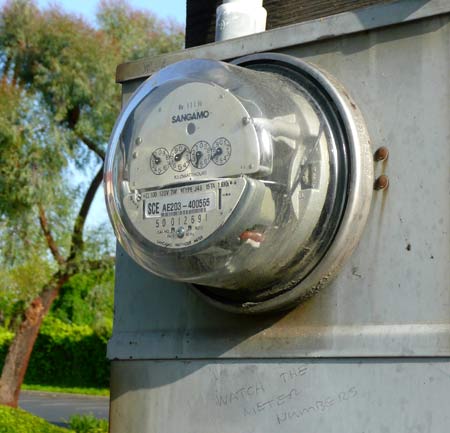
In a lot of the debate and discussion about energy, future electricity generation and metering, improved efficiency and influencing consumer behaviour – at least from an engineering perspective – the term “demand” is used, in conjunction with “supply”, to represent the energy required to be supplied to consumers, much as in conventional “supply and demand” economics.
Now, I’m sure others have investigated this and characterised it economically much better than I can, but it seems to me that demand for energy (and sometimes water) is significantly different to, say, demand for most consumer products in that, for the most part, consumers only “demand” it indirectly. It is the products and systems around us which draw the current: they are important actors and have the agency, in a sense (at least unless we really understand the impacts of how they operate).
While with, say, a car’s fuel consumption, we experience the car’s demand for fuel, and pay for it, directly in proportion to our demand for travel, with most household electricity use, we not only generally wait a month or more before having to confront the “demand” (via the bill), but separating the background demand (such as a refrigerator’s continuous energy use simply to operate) from conscious demand (such as our decision to use a fan heater all day) is very difficult for us to do as consumers: from a very simple consumer perspective (ignoring things like reactive power flow), electricity is interchangeable, and the feedback we get on our behaviour is only very weakly linked to the specifics of that behaviour.
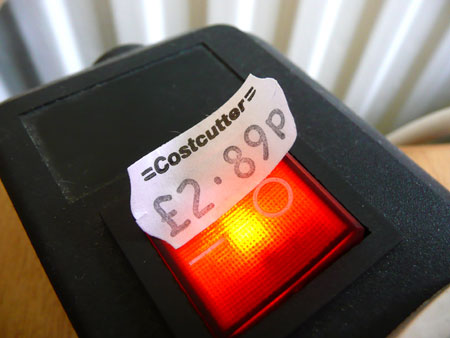
Basically, then, a lot of “demand” is not conscious demand at all. Most consumers don’t make an in-the-moment decision to use more electricity if it gets cheaper (though it may happen over time, e.g. if someone decides to get electric heating because oil heating has become more expensive) or vice versa. The demand is a function of the products and systems around us, our habits, lifestyle and behaviours but it is very difficult for us to see this, and make decisions which have an impact on this. If there are major changes, such as a massively changed price, then real conscious demand changes may happen (so a kind of stepped curve rather than anything smooth) but this is surely not what happens in everyday life. At least at present.
Maybe, then, part of what design could offer here is to help translate this unconscious, product-led, delayed payment demand into a visible, tangible, immediate demand which makes us consider it like any other everyday buying / consumption choice. Real-time self-monitoring feedback from clever metering technology (e.g. Onzo or Wattson) could go a long way here, but what about feedforward? Can we go as far as on-off switches with price labels on them? (Digital, updated, real-time, of course.) Would it make us more price-sensitive to energy costs? Would that influence our behaviour?