Home-made instant poka-yokes

Everyday poka-yoke

Update: Also known as Useful Landmines in the 43 Folders world - thanks Pantufla!

Mistake-proofing - poka-yoke - can be as simple as encouraging/forcing yourself to do things in a sequence, to avoid forgetting or avoiding intermediate steps. If you’re the sort of person who hangs a jacket or bag on the door handle, so it can’t be forgotten on the way out, puts things in front of the door so you can’t forget them when you’re going out, or at the top or bottom of the stairs so you’ll remember to carry them to their intended destination next time you’re using the stairs, you’re engaged in mistake-proofing. You’re introducing a behaviour-shaping constraint to assist your own effectiveness.

In the above photo, putting the mobile phone (on-charge) inside a shoe makes it more likely that it will be remembered when going out: the act of putting the shoes on requires the user to pick up the phone, which could otherwise be easily forgotten. Similarly, Mark Hurst (of Good Experience and ‘Broken’ fame) regularly features two very simple poka-yoke procedures in his Uncle Mark’s Gift Guide & Almanac:

How to remember if the batteries aren’t in your camera

Summary: If the batteries are dead, or aren’t in the camera, keep the battery compartment open.

Description: When you’re charging your camera batteries (in a wall charger, say), keep the camera’s battery compartment open. That way, if you pick up your camera to put it in your pocket or purse, you’ll see that the battery compartment is open and will remember that the batteries aren’t in it.

Leaving the camera battery door open

There’s also this:

How to make sure they see the papers you dropped off

Summary: Put the papers on their chair.

Description: Here’s a tip I learned years ago and have used ever since. If you want to make sure that someone sees the papers you dropped off at their desk, put the papers on their chair. The natural inclination is to drop the files on the keyboard, or beside the mousepad. What’s the first thing the person does when they get back to their desk? They shove the papers aside, onto a nearby pile. They want to check their e-mail immediately, and those papers are in the way!

But put the papers on their chair, and watch what happens: the person refuses to sit on them! They take a second to pick them up, and while they’re in-hand, the person takes a look at the files while they get comfortable in the chair. Bingo: you guarantee attention to your drop-off.

Papers on chair

Of course the papers-on-chair method can also be used to remind (or discipline) yourself about dealing with important papers.

This kind of very simple sequencing poka-yoke comes almost naturally in our everyday lives, at least with certain tasks. Sometimes it’s simply reminding ourselves to do something (e.g. putting a Post-It note somewhere we can see it); other times it’s trying to prevent us proceeding until some action has been taken (e.g. putting a Post-It note right in the middle of the computer screen so we can’t ignore it). Donald Norman’s Things That Make Us Smart has some interesting discussion of the power of Post-It notes and their importance as “information in the world”, disburdening some of our mental load - also part of the whole Getting Things Done phenomenon.

Sometimes we even (consciously or otherwise) try to ‘trick’ ourselves into behaving how we want to (or know we should) - the random offset alarm clock (patent; Halfbakery discussion) and Gauri Nanda’s “runaway success” Clocky being examples that spring to mind. (I once had a bedside clock radio where the button to set the minutes no longer worked, which meant that I could only set it either on-the-hour, or, because I forgot to do it at the right moment, set it maybe between 5 and 30 minutes fast. That meant that there was an uncertainty built into every time I glanced at the display, and indeed every time the alarm went off. I was rarely late, as a result.)

I have a hunch that almost trivially simple sequencing poka-yokes (in particular) could be important in designing for sustainable behaviour, such as reducing energy use and waste generation. For example, if your rubbish bin had a recycling box built into the top, so that you had to lift it out of the way (hinged, perhaps, to make it hassle to remove entirely) before putting anything into the main bin, it would be difficult to ignore the recycling box. Hence, learning as much as possible about different methods people use to mistake-proof themselves, or shape their own everyday behaviour, is likely to be useful in exapnding this line of research.

So, what are the everyday home-spun (or otherwise) tricks you use to help mistake-proof yourself?

Spear’s Spellmaster: Poka-yoke in the classroom

Back in September we looked at Mentor Teaching Machines, a clever type of non-linear textbook from the early 1970s which guides/constrains the user’s progression, in the process diagnosing some common types of misunderstanding and ‘remedying’ them. The comments were enlightening, too: there’s a lot more history to programmed teaching texts and programmed instruction than I realised, and I will certainly be covering some of this, and what useful design principles and inspiration can be drawn from it, at some point.

Now, this is not in the same league, but interesting nonetheless: a ‘game’ to teach children (4 years onwards) spelling using a poka-yoke technique. The Spellmaster, from J W Spear & Sons - the example here is from 1980 (the Enfield factory was closed after a Mattel takeover in 1994) featured eighty plastic letter tiles, Scrabble-like but larger, with raised pegs underneath, a different pattern for each letter.

Spear's Spellmaster

Spear's Spellmaster

Spear's Spellmaster

Spear's SpellmasterSpear's Spellmaster

The letter tiles are used to spell the names of objects and concepts (colours, numbers) illustrated on punched cards which fit onto a backing board, the tiles only fitting in their spaces correctly if the pegs pattern aligns perfectly with the punched holes. If the wrong letter is used, the tile doesn’t fit properly and sits at an angle rather than snapping neatly into place. The ’snap’ of a correctly positioned letter is actually pretty satisfying - surprisingly so, given the combination of plastic (urea formaldehyde, I think) and 30-year old cardboard.

Spear's Spellmaster

Spear's Spellmaster

Spear's SpellmasterSpear's Spellmaster
Left: The wrong tile - the pegs do not align with the punched holes. Right: The correct tile - everything lines up. Below: The wrong tile here - note the extra peg on the left-hand edge of the tile, which doesn’t match up with the punched hole, and leads to the tile not sitting down properly.
Spear's Spellmaster

Spear's Spellmaster

Letters which could work either way up, such as ‘o’ and ’s’ have - as would be hoped - symmetrical peg patterns. It’s a simple system, but it’s clever and while not offering any ‘remedial’ function to the child, I would think it’s not too likely that many children would try all 25 other letters assuming the first one didn’t fit. Hence, there is some bias against pure trial-and-error. It’s interesting to think how immediately we might consider a computer-based solution to this kind of design brief today, where a purely physical one would work very well and give a different kind of tactile satisfaction.

Spear's Spellmaster

Spear's Spellmaster

I believe in mirror-queues

Meagan Call has written a very interesting piece examining the technique used in some (women’s) public restrooms* of moving the mirrors to the wall near the entrance/exit, rather than behind the sinks as might be expected (and is usually found in mens’ facilities), to lessen queueing and speed up throughflow:

No mirrors behind the sinks: photo by Meagan CallMirrors by exit instead: photo by Meagan Call

Women often linger, using the excess water from their recently scrubbed hands to squish, flatten, and fluff their hair. I’ve seen women who don’t bother to wash their hands bend over the sinks to play with their hair or re-touch makeup. And of course, some women go into the restroom for the sole purpose of looking into the mirror. No mirror equals less congestion, people washing their hands can get to the sinks more easily, and will leave more quickly.

Moving the mirror near the doors is actually an intelligent solution… by moving the mirrors away from the water, primping is less desirable. In addition, by placing it in the pathway of the door, people are more likely to feel foolish and in the way, and are therefore more likely to pass by quickly. The open space does not invite people to stay and look in the mirror.

Meagan’s analysis is spot-on - this is a clever technique which is subtle enough not to be noticed by the majority of users, but which nevertheless shapes their behaviour. The agenda is one of social benefit (for the greater good of the other users, reducing congestion) rather than explicitly commercial (in the context of the service area where the facilities are located), but it presumably has the effect of reducing complaints, hence increasing customer satisfaction even if only marginally.

We’ve looked before at some of the issues around mirrors in a retail environment, but in a confirmation/corollary of Meagan’s thoughts, I’ll end with two pertinent quotes:

Stand and watch what happens at any reflective surface - we preen like chimps, men and women alike… Mirrors slow shoppers in their tracks, a very good idea for whatever merchandise happens to be in the vicinity.

Paco Underhill, Why We Buy.

A large hotel in an American city received many complaints about the slowness of its elevators. It installed mirrors next to the elevator doors. The complaints ended.

Lawrence Lessig, Code and Other Laws of Cyberspace

………..

*/bathrooms/toilets/conveniences/other

Photos from Meagan Call.

Do you really need to print that?

Do you really need to print that?

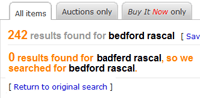
This is not difficult to do, once you know how. Of course, it’s not terribly useful, since a) most people don’t read the display on a printer unless an error occurs, or b) you’re only likely to see it once you’ve already sent something to print.

Is this kind of very, very weak persuasion - actually worthwhile? From a user’s point of view, it’s less intrusive than, say, a dialogue box that asks “Are you sure you want to print that? Think of the environment” every time you try to print something (which would become deeply irritating for many users), but when applied thoughtfully, as (in a different area of paper consumption) in Pete Kazanjy’s These Come From Trees initiative, or even in various e-mail footers* (below), there may actually be some worthwhile influence on user behaviour. It’s not ‘micropersuasion’ in Steve Rubel’s sense, exactly, but there is some commonality.

Please consider the environment

I’m thinking that addressing the choices users make when they decide to print (or not print) a document or email could be an interesting specific example to investigate as part of my research, once I get to the stage of user trials. How effective are the different strategies in actually reducing paper/energy/toner/fuser/ink consumption and waste generation? Would better use of ‘Printer-friendly’ style sheets for webpages save a lot of unnecessary reprints due to cut-off words and broken layouts? Should, say, two pages per sheet become the default when a dicument goes above a certain number of pages? Should users be warned if widows (not so much orphans) are going to increase the number of sheets needed, or should the leading be automatically adjusted (by default) to prevent this? What happens if we make it easier to avoid printing banner ads and other junk? What happens if we make the paper tray smaller so the user is reminded of just how much paper he/she is getting through? What happens if we include a display showing the cost (financially) of the toner/ink, paper and electricity so far each day, or for each user? What happens if we ration paper for each user and allow him or her to ‘trade’ with other users? What happens if we give users a ‘reward’ for reaching targets of reducing printer usage, month-on-month? And so on. (The HP MOPy Fish - cited in B J Fogg’s Persuasive Technology - is an example of the opposite intention: a system designed to encourage users to print more, by rewarding them.)

Printing is an interesting area, since it allows the possibility of testing out both software and hardware tactics for causing behaviour change, which I’m keen to do.

Slanty design

Library of Congress, Main Reading Room
The Main Reading Room, Library of Congress. Image from CIRLA.

In this article from Communications of the ACM from January 2007, Russell Beale uses the term slanty design to describe “design that purposely reduces aspects of functionality or usability”:

It originated from an apocryphal story that some desks in the US Library of Congress in Washington, DC, are angled down toward the patron, with a glass panel over the wood, so when papers are being viewed, nothing harmful (like coffee cups, food and ink pens) can be put on top of them. This makes them less usable (from a user-centric point of view) but much more appropriate for their overall purpose.

[S]lanty design is useful when the system must address wider goals than the user might have, when, say, they wish to do something that in the grander scheme of things is less than desirable.

New Pig cigarette binCone cup
The angled lid on this cigarette bin prevents butts being placed on top; the cone shape of cup subtly discourages users from leaving it on the table.

We’ve looked before on this site at a couple of literally ’slanty’ examples - notably, cigarette bins with angled lids and paper cone cups (above) - and indeed “the common technique of architects to use inclined planes to prevent people from leaving things, such as coffee cups, on flat spaces” is noted on the Designweenie blog here - but in his article, Beale expands the scope of the term to encompass interfaces or interaction methods designed to prevent or discourage certain user behaviour, for strategic reasons: in essence, what I’ve tried to corral under the heading ‘architectures of control‘ for the last few years, but with a different way of arriving at the idea:

We need more than usability to make things work properly. Design is (or should be) a conversation between users and design experts and between desired outcomes and unwanted side effects… [U]ser-centred design is grounded in the user’s current behavior, which is often less than optimal.

Slanty design incorporates the broader message, making it difficult for users to do unwanted things, as well as easy to do wanted things. Designers need to design for user non-goals - the things users do not want to do or should not be able to do even if they want to [my emphases]. If usability is about making it easy for users to do what they must do, then we need to have anti-usability as well well, making it difficult for them to do the things we may not want them to do.

He gives the example of Gmail (below), where Google has (or had - the process is apprently not so difficult now) made it difficult for users to delete email - “Because Google uses your body of email to mine for information it uses to target the ads it delivers to generate revenue; indeed, deleting it would be detrimental to the service” but that in fact, this strategy might be beneficial for the user - “By providing a large amount of storage space for free, Gmail reduces any resource pressure, and by making the deletion process difficult it tries to re-educate us to a new way of operating, which also happens to achieve Google’s own wider business goals.” This is an interesting way of looking at it, and somewhat reminscent of the debate on deleting an Amazon or eBay account - see also Victor Lombardi’s commentary on the where the balance lies.

How to delete an email in Gmail

However, from my point of view, if there’s one thing which has become very clear from investigating architectures of control in products, systems and environments, it’s that the two goals Beale mentions - “things users do not want to do” and things users “should not be able to do” - only coincide in a few cases, and with a few products, and a few types of user. Most poka-yoke examples would seem to be a good fit, as would many of the design methods for making it easier to save energy on which my PhD is focusing, but outside these areas, there are an awful lot of examples where, in general, the goal of the user conflicts with the goal of the designer/manufacturer/service provider/regulator/authority, and it’s the user’s ability which is sacrificed in order to enforce or encourage behaviour in line with what the ‘other’ party wants. “No-one wakes up in the morning wanting to do less with his or her stuff,” as Cory Doctorow puts it.

Beale does recognise that conflicts may occur - “identify wider goals being pursued by other stakeholders, including where they conflict with individual goals” - and that an attempt should be made to resolve them, but - personally - I think an emphasis on using ’slanty’ techniques to assist the user (and assist the ‘other party’, whether directly or simply through improving customer satisfaction/recommendation) would be a better direction for ’slanty design’ to orient itself.

Slanty carousel - image by Russell Beale
“Slanty-designed baggage carousel. Sloping floor keeps the area clear”. From ‘Slanty Design’ article by Russell Beale.

Indeed, it is this aim of helping individual users while also helping the supersystem (and actually using a slant, in fact) which informs a great suggestion on which Beale elaborates, airport baggage carousels with a slanted floor (above):

The scrum of trolleys around a typical [carousel] makes it practically impossible to grab a bag when it finally emerges. A number of approaches have been tried. Big signs… a boundary line… a wide strip of brightly coloured floor tiles…

My slanty design would put a ramp of about 30 degrees extending two meters or so up toward the belt… It would be uncomfortable to stand on, and trolleys would not stay there easily, tending to roll off backward or at least be awkward to handle. I might also add a small dip that would catch the front wheels, making it even more difficult to get the trolley or any other wheeled baggage on it in the first place, but not enough to trip up a person.

If I was being really slanty, I’d also incorporate 2 cm-high bristles in the surface, making it a real pain for the trolleys on it and not too comfy for the passengers to stay there either. Much easier for people to remain (with their trolleys) on the flat floor than negotiate my awkward hill. We’d retain the space we need, yet we could manage the short dash forward, up the hill, to grab our bags, then return to our trolleys, clearing the way for the next baggage-hungry passenger.

There are some very interesting ideas embodied in this example - I’m not sure that using bristles on such a slope would be especially easy for wheelchair users, but the overall idea of helping both the individual user, and the collective (and probably the airport authority too: reducing passenger frustration and necessity for supervision of the carousel), is very much something which this kind of design, carefully thought out, can bring about.